If We Have Learned Anything, the Time to Act is Now
Reflections on Rev. Dr. Martin Luther King, Jr. Day
I was twelve years old when the first official Martin Luther King, Jr. federal holiday as observed in January 1986. The bill was signed three years prior, by none other than President Ronald Reagan. As a North Carolinanian, and avid student of history, I wasn’t the least bit surprised to learn that our very own Senator Jesse Helms led a filibuster opposing the bill.
I grew up being taught about the Civil War and the Civil Rights Movement, learning about awful events in our shared American history. The major battles over slavery took place in South Carolina and Virginia. The disturbing images of the 1950’s and 1960’s took place in the “Deep South” of Mississippi and Alabama. These places seemed as far away as Fiji and as abstract as Kathmandu.
I carried in my heart and mind images of Bull Conner and his firehoses alongside the tone and cadence of Rev. Dr. King’s speech on the steps of the Lincoln Memorial. The emotion and urgency articulating a struggle I thought I understood, but did not comprehend. Academic intellectual comprehension is no substitute for embodied experience.
I did not see myself in the narrative, as though somehow this could be my history without being my story. This ugly stain, relegated to a past that predated me somehow. Historical events from times past, documented in books, curated in museums and collected in archives. As a nation, we were all beyond that now, weren’t we?
I did not see how this history could intersect with my story, until I read a letter penned in April 1963 on newspaper margins and scrap paper, addressed to eight white clergy in Birmingham, Alabama. Two of the clergy, bishops of my own denominational heritage, Methodist.
In the now dogeared copy on my shelf, Why We Can’t Wait by Martin Luther King, Jr., I discovered “Letter from Birmingham Jail.” In the Apostolic tradition of Paul and others before him, King, sitting in a jail cell, respectfully, determinedly and powerfully articulates why the time for waiting is over, why the time for non-violent civil action is now and most profoundly, King’s great disappointment toward the white moderate church leadership's failure to join the movement in the march for justice.
I found my place in the narrative.
If I were one of the white moderate clergy serving in the 1950’s and 1960’s, would I stand and join the movement, or remain passive and silent?
Until 2020, and the death of George Floyd, the question had been academic. Then it became a matter of conscience.
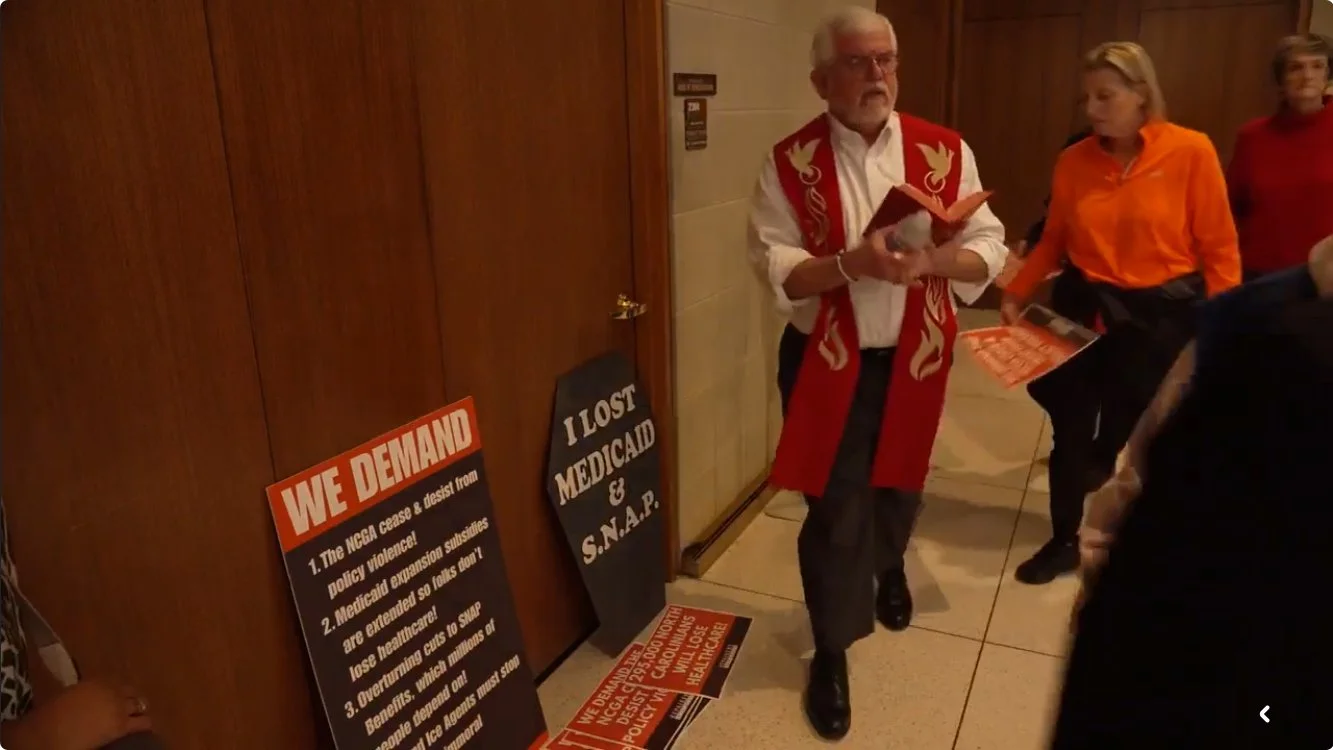
In July 2025, with the passage of legislation targeting the most vulnerable in our country, matters of conscience became opportunities to show up.
In November 2025, with the presence of ICE and Border Patrol Agents stalking the streets and terrorizing neighborhoods of Charlotte, the opportunity to show up became a clarion call to action.
If we have learned anything, the time to act is now.